


How Medical Centre Valuation Works in Australia
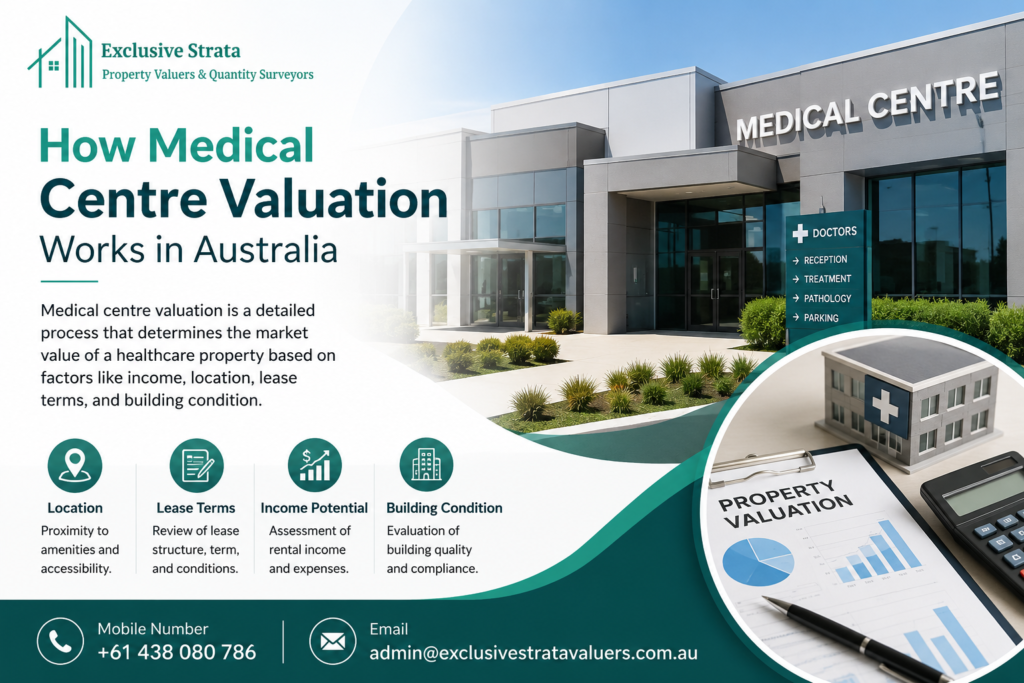
Medical centres occupy a distinct place in the commercial property landscape, sitting somewhere between a standard retail premises and a specialised healthcare asset. They generate income through consulting rooms, allied health tenancies, and often a mix of general practice and specialist services, all within a fitout designed around clinical requirements rather than general commercial use. A professional medical centre valuation therefore requires a clear understanding of healthcare tenancy structures, the strength of medical tenant covenants, and the extent to which a highly specialised fitout contributes to the building’s underlying value.
This guide explains how medical centre valuation works in Australia, the factors that distinguish these properties from standard commercial assets, and what owners, buyers, and their advisers should expect from a properly prepared report.
SUMMARY
What This Article Covers
This guide explains how medical centre valuation is approached in Australia and why it differs from a standard commercial property valuation. It covers the income and tenancy factors specific to healthcare properties, the role of the medical fitout in determining value, the valuation methods typically applied, and the situations that most commonly call for an independent medical centre valuation. It also answers the questions owners and buyers ask most often about this type of assessment.
What Makes Medical Centre Valuation Different
A medical centre valuation draws on the same underlying principles as any commercial property valuation, but it applies them to a building type with genuinely distinct characteristics. Income is generated through a mix of tenancy structures, ranging from general practice leases to allied health arrangements and, in some cases, service fee models tied to practitioner billings rather than a conventional rent. A qualified commercial property valuer needs to understand how each of these arrangements contributes to the property’s overall income position before a defensible value can be reached.
The physical building also plays a larger role than it does in many other commercial property types. Medical centres are typically fitted out to a clinical standard, with consulting rooms, treatment areas, and compliance features that would need to be replicated or removed for any alternative use. This specialised fitout affects both the property’s appeal to a genuinely comparable buyer and how readily it could be repositioned if the current use ever changed.
Income Analysis and Tenant Mix
A valuer examines the full tenant mix within a medical centre, including lease terms, rent reviews, and the proportion of income tied to stronger, longer established practices compared with newer or more transient tenancies. A building anchored by a well established general practice or specialist group generally supports a more confident income analysis than one reliant on short term or informal arrangements.
Tenant Covenant Strength
The financial strength and track record of the tenants occupying a medical centre materially affects its value, since income backed by an established, well regarded practice carries considerably less risk than income from a newly established or less proven tenant. This covenant strength is a core consideration in any income based valuation approach.
Valuation Methods Applied to Medical Centres
Medical centre valuations generally draw on one or more established commercial valuation approaches, selected based on the property’s income profile and the evidence available.
The Capitalisation of Income Approach
This approach capitalises the property’s net income at a rate reflecting the risk profile of its tenant mix, lease terms, and location, arriving at a value that reflects the building’s ongoing earning capacity as a commercial real estate asset.
Direct Comparison With Similar Healthcare Properties
Where genuinely comparable medical centre sales exist, a direct comparison approach can support or cross check the income based figure, though truly comparable sales can be limited given how specific these properties tend to be to their local healthcare market.
Assessment of the Medical Fitout
Because the fitout represents a significant component of a medical centre’s overall value, the valuer assesses its condition, compliance status, and how readily it could support continued medical use or, if relevant, an alternative commercial purpose.
Factors That Influence Medical Centre Value
Several specific factors shape the final figure in a medical centre valuation beyond the standard considerations applied to other commercial property.
Location and Accessibility
Proximity to residential catchments, public transport, and parking availability all affect how accessible a medical centre is to patients, which in turn influences the strength of its tenant demand and rental income.
Compliance With Healthcare Standards
Applicable requirements vary according to the services provided, the jurisdiction and the practice’s accreditation status. For general practices seeking accreditation, the RACGP practice-facility standards address fit-for-purpose facilities, dedicated consultation spaces, privacy, waiting areas, toilets, hand-cleaning facilities and cleanliness.
Strata Title Considerations
Many medical centres operate within a strata-titled building, particularly in suburban locations, which means a strata property valuation approach may also need to account for common property arrangements, by-law restrictions, and the owners’ corporation’s management of the building.
When Property Owners Need a Medical Centre Valuation
Independent medical centre valuations are required across a range of circumstances, many of which mirror the situations that call for any commercial property valuation.
Purchase, Sale and Finance Purposes
Buyers, sellers, and lenders all rely on an independent valuation to confirm a medical centre’s value before a transaction proceeds or finance is approved, giving every party confidence the figure reflects genuine market conditions.
Capital Gains Tax and Family Law Matters
Where a medical centre is sold, transferred, or forms part of a family law property settlement, a valuation for capital gains tax purposes or a family law property valuation gives the relevant parties a defensible, independently assessed figure.
Litigation and Dispute Resolution
Where a dispute over a medical centre’s value arises between owners, partners, or beneficiaries, litigation valuations prepared to expert witness standards give the parties, or a court, a figure that has been properly tested rather than assumed.
When a Medical Centre Valuation Is Required
● When purchasing or selling a medical centre or healthcare property
● When a lender requires independent evidence of value to support finance
● When a medical centre is transferred and a capital gains tax valuation is needed
● When a medical centre forms part of a family law property settlement
● When a dispute between owners or partners requires an independent valuation
● When reviewing a portfolio that includes healthcare or medical property assets
Frequently Asked Questions
Q: What is a medical centre valuation?
A: It is an independent assessment of a medical centre’s commercial value, accounting for its tenant mix, income profile, and specialised fitout. It follows established commercial valuation methods adapted to the healthcare property sector.
Q: How is a medical centre valuation different from a standard commercial valuation?
A: It places greater emphasis on tenant covenant strength, healthcare specific compliance, and the specialised fitout, all of which affect a medical centre’s value more significantly than in many other commercial property types.
Q: Does tenant mix affect a medical centre’s value?
A: Yes. A centre anchored by well-established, long-term medical practices generally supports a stronger income analysis than one reliant on newer or less proven tenancies.
Q: Are strata-titled medical centres valued differently?
A: Strata-titled medical centres require additional consideration of common property arrangements and owners corporation management, alongside the standard commercial valuation factors.
Q: When would I need an independent medical centre valuation?
A: Common situations include purchasing or selling the property, securing finance, capital gains tax events, family law settlements, and disputes between owners or partners.
Q: Does the medical fitout affect the property’s value?
A: Yes. The fitout represents a significant part of a medical centre’s overall value, and its condition and compliance status affect both current usability and future flexibility.
Q: Who should prepare a medical centre valuation?
A: An experienced commercial property valuer familiar with healthcare tenancy structures and medical property compliance requirements should prepare the report, given how specialised this property type can be.
CONCLUSION
Medical centres sit apart from standard commercial property, and valuing them properly means understanding healthcare specific tenancy structures, tenant covenant strength, and the role a clinical fitout plays in a building’s overall worth. A properly prepared medical centre valuation gives owners, buyers, and their advisers a defensible figure grounded in the realities of this specialised property sector.
Engaging an experienced commercial property valuer with genuine medical centre expertise remains the most reliable way to arrive at a figure that will hold up wherever it needs to be relied upon.
Need a Medical Centre Valuation? Contact Exclusive Strata Valuers
Exclusive Strata Valuers prepares independent medical centre and commercial property valuations for owners, buyers, and legal advisers across Sydney and NSW. Our valuers understand healthcare tenancy structures, medical fitouts, and the compliance factors that shape this specialised property sector.
Visit exclusivestratavaluers.com.au | Sydney and NSW Wide | Request a Quote